
1
/
of
1
All Turtles
How to Identify a Turtle – Printable 12-Step Infographic (Digital Download)
How to Identify a Turtle – Printable 12-Step Infographic (Digital Download)
No reviews
Regular price
$4.95 USD
Regular price
Sale price
$4.95 USD
Shipping calculated at checkout.
Quantity
Couldn't load pickup availability
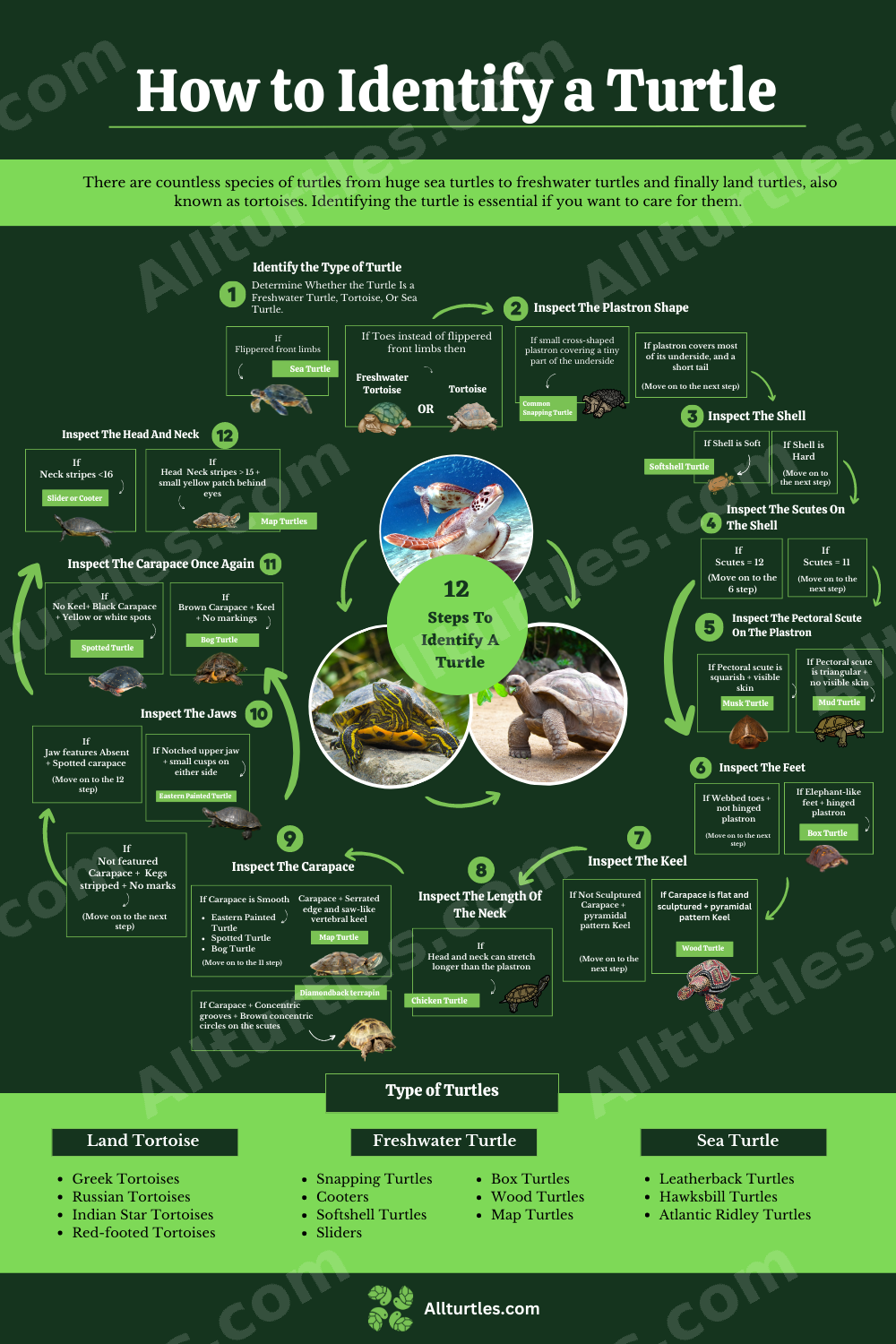
Identifying a turtle correctly is one of the most important first steps in responsible care and handling. This one-page infographic presents a 12-step visual decision guide that helps you classify turtles by major group and common traits - ideal when you need a fast, structured way to evaluate what you’re seeing.
What this infographic covers
- A 12-step identification flow to guide you through key physical traits
- How to distinguish Sea Turtles vs. Freshwater Turtles vs. Land Tortoises
Visual checks including:
- Plastron shape and underside coverage
- Shell type (soft vs. hard)
- Scute counts and plastron scute features
- Feet type (webbed vs. elephant-like)
- Keel and carapace characteristics
- Neck length and head/neck markings
- Jaw features used in identification
Reference list included on the infographic
A quick “Type of Turtles” section includes examples across:
- Land Tortoises (e.g., Greek, Russian, Indian Star, Red-footed)
- Freshwater Turtles (e.g., Snapping, Cooters, Softshell, Sliders, Box, Wood, Map)
- Sea Turtles (e.g., Leatherback, Hawksbill, Atlantic Ridley)
Great For
- Pet turtle and tortoise owners
- Teachers, homeschool families, and students
- Nature centers, wildlife educators, and reptile clubs
- Rescue/rehab triage checklists (as a visual reference)
Printing Notes (for your listing)
- Digital product only (no physical item shipped)
- Print at home, a local print shop, or a campus/library printer
- For best results: use quality paper (heavier matte or satin) and print at high quality settings
- Tip: If printing on Letter/A4, select “Fit to Page” (you may see small margins depending on printer settings)
Important Note
This infographic is a visual guide to help with general identification. For exact species ID, legal requirements, or medical concerns, consult a qualified reptile veterinarian, local wildlife authority, or an experienced herpetologist.
Share